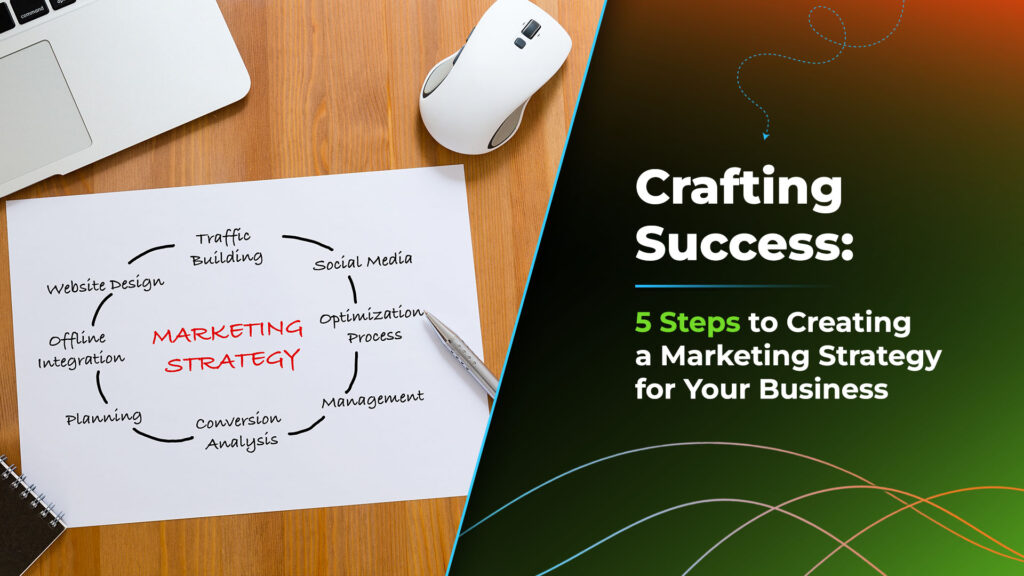
To create a marketing strategy, follow five steps in order: set a clear objective, understand your audience, choose the channels that reach them, plan content that fits each stage of the buying journey and measure results so you can adjust. Skipping the first two steps is the most common reason marketing feels busy but does not work. This guide walks through each step, includes a tool for writing a measurable goal and ends with a checklist for your finished strategy.
What Is a Marketing Strategy?
A marketing strategy is the plan that explains what you want to achieve, who you want to reach, how you will reach them and how you will know it worked. A plan or calendar says what you will do and when. Tactics are the individual actions. Strategy comes first, because it tells you which plans and tactics are worth the effort.
Step 1: Set Clear Objectives
An objective turns a wish into a target. “Get more customers” is a wish. A good objective is specific, measurable, realistic, relevant to the business and has a deadline, which is the idea behind SMART goals. Pick one main objective first, such as more enquiries, bookings, online orders or sign-ups. Try the builder below to write yours.
Goal sentence builder
Step 2: Know Your Audience
Marketing works when it speaks to a specific group of people with a specific problem. Answer these questions using real evidence rather than guesses:
- Who are your best customers, and what do they have in common?
- What problem are they trying to solve when they come to you?
- What do they worry about before buying, such as price, trust or time?
- Where do they look for answers, such as search, social media, friends or reviews?
Your best sources are your own customers: sales conversations, emails, reviews, support questions and the pages visitors use on your site. A short conversation with five recent customers often reveals more than a long survey.
Step 3: Choose the Right Channels
Channels fall into three groups. A balanced strategy usually uses a bit of each, but starts with the ones that fit your audience and goal.
| Type | What it is | Examples | Good for |
|---|---|---|---|
| Owned | Channels you control | Website, blog, email list, Business Profile | Building a lasting asset and converting interest |
| Earned | Attention others give you | Reviews, referrals, press, mentions, shares | Building trust and credibility |
| Paid | Reach you pay for | Search ads, social ads, sponsorships | Speed and testing new audiences |
Do not try to be everywhere. Choose one to three channels you can maintain well. If you use email, Canada’s anti-spam law, CASL, requires consent before you send marketing messages. For a channel-by-channel look at what each one can do, see our digital marketing tips.
Step 4: Create Content That Fits Each Stage
People do not buy the first time they hear about you. Match content to where they are in the journey:
| Stage | The customer is asking | Useful content |
|---|---|---|
| Awareness | “What is causing this problem?” | Guides, explainers, short videos, social posts |
| Consideration | “What are my options?” | Comparisons, checklists, case studies, FAQs |
| Decision | “Can I trust this business?” | Service pages, reviews, clear pricing information, a simple way to contact you |
| After the sale | “Was this worth it?” | Follow-ups, helpful tips, requests for reviews |
Write for people first. Keep a consistent voice, as covered in our guide to building a brand through social media management, and make sure your pages can be found, which our post on SEO strategies for online visibility explains.
Step 5: Measure and Adjust
Decide what to measure before you start, and tie each measure to your objective:
- For enquiries or sales: form submissions, calls, bookings and revenue by source.
- For traffic: visits and the pages they land on.
- For awareness: reach, impressions and searches for your name.
- For retention: repeat purchases, reviews and replies.
Tag the links you control with UTM parameters so analytics shows which channels produce results. Review monthly with three questions: what should we keep doing, what should we stop and what should we try next? Change one thing at a time so you can tell what caused a change.
What Should a Finished Strategy Include?
- One written, measurable objective.
- A short description of your audience and their main problem.
- Your promise: what you offer and why someone should choose you.
- One to three channels with a reason for each.
- A content plan matched to the buying stages.
- A budget with time, creative, tools and ad spend listed separately.
- Measures, an owner and a monthly review date.
Our guide to building a digital marketing plan includes a one-page template and a 90-day roadmap you can use next.
Common Mistakes When Creating a Marketing Strategy
- Starting with channels before deciding the objective.
- Trying to reach everyone, which makes the message vague.
- Copying competitors without knowing whether their audience matches yours.
- Not tracking anything, then guessing what worked.
- Never reviewing the plan, even when results change.
Working With Digitalise
Digitalise is an Ottawa-based agency that offers SEO, social media, paid advertising, email marketing, video production, web development and branding. We do not promise specific results. If you would like help shaping a strategy, contact us.
Frequently Asked Questions
What are the steps to create a marketing strategy?
Set a clear objective, understand your audience, choose the right channels, create content for each buying stage and measure results so you can adjust.
What is the difference between a marketing strategy and a marketing plan?
A strategy explains what you want to achieve and why. A plan sets out the actions, schedule and budget used to carry it out.
How many marketing channels should a small business use?
One to three that fit your audience and goal and that you can maintain. Add more only when the existing ones are working.
How do I set a marketing goal?
Make it specific, measurable and time-bound, such as increasing monthly enquiries from a current number to a target within a set number of months.
How often should I review my marketing strategy?
Review results monthly and revisit the strategy itself every quarter or when your business, audience or results change.
How long before a marketing strategy shows results?
It depends on the channel. Paid ads can generate data quickly, while SEO and brand building usually take months, so judge progress over a sensible period.
Final Thoughts
A good marketing strategy is simple enough to explain in a minute: what you want, who you are speaking to, where you will reach them, what you will say and how you will check. Write it down, review it often and adjust based on what the numbers show.