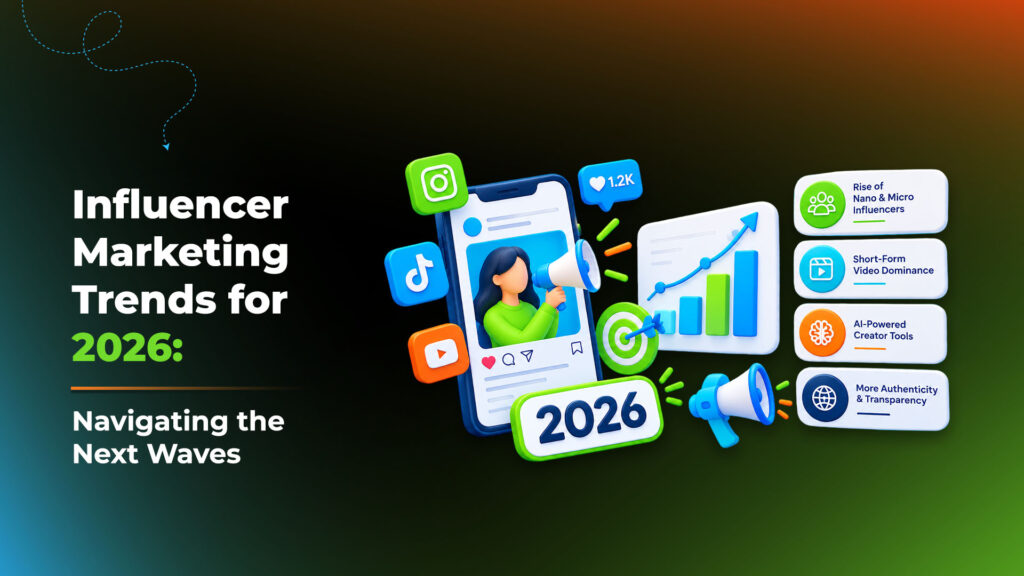
The biggest shifts in influencer marketing for 2026 are not flashy new formats. They are smaller, closer-fit creators, longer partnerships, tighter measurement and, in Canada, clearer rules about disclosing paid and gifted content. This update to our 2024 trends guide keeps what has held up, drops what has not, and is honest about which trends are backed by published guidance and which are practical judgment.
Influencer Marketing Trends at a Glance
Trend lists often present opinion as fact. To keep this one honest, each trend carries a label.
- Smaller, closer-fit creatorsTest first
- Choosing platforms by audience, not hypePractical
- Long-term partnerships and ambassadorsPractical
- Authenticity over polishPractical
- Interactive and live contentTest first
- Tracking results with links and codesPractical
- Representation that matches your marketPractical
- Clear disclosure and complianceDocumented
- AI and virtual influencersDocumented
Documented backed by a published Canadian guideline. Practical our recommendation from how campaigns are run, not a measured statistic. Test first results vary, so run a small pilot.
Smaller, Closer-Fit Creators
Nano and micro-influencers, creators with smaller but often tightly knit audiences, remain a sensible place to start, especially for local businesses. A creator with a few thousand local followers can be a better fit for a neighbourhood service than a national personality, because their audience already shares your market.
There is no single definition of the size tiers, so do not chase a label. Judge a creator by fit: who follows them, how people respond in the comments and whether their audience could realistically become your customers. Start with a small pilot and compare results before committing a bigger budget.
Choose Platforms by Where Your Customers Are
The 2024 version of this post pointed to new and emerging platforms, including some that have since faded. A better rule is to pick the one or two platforms your customers already use and test there. Platform rules, features and availability can change, so avoid building a whole campaign on a single channel, and keep the content on your own website and email list as well.
Long-Term Partnerships Over One-Off Posts
Working with the same creator over several months lets their audience see a genuine, repeated relationship instead of a single ad. It also gives you time to learn what works. A good agreement spells out deliverables, how long the content can be used, whether the creator can work with competitors and how disclosure will be handled.
Authenticity Over Aesthetic
Audiences respond to honest experience more than polished perfection. Give creators a clear brief with your key facts and limits, then let them speak in their own voice. Never script false experiences, and ask for honest feedback. If a creator would not use your product themselves, they are probably the wrong fit.
Interactive and Live Content
Polls, question-and-answer sessions and live events turn viewers into participants. They work well for product launches and for answering questions in real time. Treat them as an experiment: try one format, watch how the audience responds and keep what earns real conversation. Remember that live content still needs clear disclosure, as the guidelines below explain.
Measure What the Campaign Actually Produced
Likes show attention, but they do not show business results. Give every creator a unique tagged link, promo code or landing page so you can see visits, enquiries and sales from each one. Our guide on turning social media likes into leads explains how to tag links and read the results in Google Analytics.
Representation That Matches Your Market
Choose creators who reflect the communities you actually serve. In Canada, that can include creators who speak French as well as English, creators from different cultural backgrounds and creators with different abilities. The aim is to be relevant and respectful, not to add a token face. Check that each creator genuinely fits your product and values before you sign.
Disclosure and Compliance in Canada
This is the trend with the clearest rules. Ad Standards’ influencer disclosure guidelines say that any material connection must be disclosed, including payment, free products, discounts, event invitations and affiliate commissions. Responsibility is shared among the influencer, the brand and any agency involved. These are industry best-practice guidelines, not legal advice, and Canada’s advertising laws against misleading claims still apply.
Where the Disclosure Should Go
Disclosure should be clear, prominent and upfront, in the same language as the endorsement. The example below shows how those rules look on a typical post.
- 1Use the platform’s paid partnership tool, but add your own disclosure too if the label may not be clearly visible on every device.
- 2Put the disclosure at the start of the caption, not buried in a hashtag list. #ad on its own is the strongest option.
- 3For video, disclose at the start, ideally within the first 30 seconds, by voice or on screen. Each independent story needs its own disclosure.
Vague tags such as #collab, #partner or #PR are not enough, and tagging the brand alone is not a disclosure. Gifted products, invited events and affiliate links all need to be disclosed too. Brief every creator on this in writing.
AI Creators and Virtual Influencers
As AI-generated content grows, the same guidelines address it. A virtual influencer still has to disclose any material connection, and it should be clear that the spokesperson is virtual. A virtual influencer should not give testimonials about experiences it cannot have, such as how a food tastes, and AI-generated or significantly altered images that show product benefits should be disclosed. A disclaimer cannot fix a misleading impression, so keep AI content truthful.
How to Plan an Influencer Campaign for 2026
- Set one goal, such as enquiries, bookings or sales, before you pick a creator.
- Shortlist creators by audience fit, and review their recent content and comments.
- Run a small pilot, then commit to the creators who deliver.
- Put disclosure, usage rights and deliverables in a written agreement.
- Track every creator with their own link or code, and review results on a schedule.
If you want support planning or running campaigns, see our social media services.
Frequently Asked Questions
What are the main influencer marketing trends for 2026?
Closer-fit micro and nano creators, long-term partnerships, tracked results, representation that matches your market, clear disclosure and careful handling of AI-generated content.
Are micro-influencers better than larger influencers?
Not always. Smaller creators can suit local or niche audiences, but fit matters more than size. Test with a small pilot and compare results.
Do influencers have to disclose paid partnerships in Canada?
Yes. Ad Standards’ guidelines say any material connection, including payment, gifts, discounts and affiliate commissions, should be clearly disclosed. Brands, influencers and agencies share the responsibility.
Where should an influencer put the disclosure?
Upfront and prominently, such as at the start of the caption, and within the first 30 seconds of a video. Hashtag lists, comments and bios alone are not enough.
How do I measure influencer marketing results?
Give each creator a unique tagged link, promo code or landing page, then track visits, enquiries and sales for each one.
Can I use an AI influencer for my brand?
Possibly, but disclose that the influencer is virtual and any material connection, and avoid testimonials about experiences it cannot have. Keep all claims truthful.
Final Thoughts on Influencer Marketing in 2026
The most durable influencer marketing trends reward the basics: choose creators who fit your audience, build relationships that last, track what happens and be open about every paid or gifted connection. Start small, learn from the results and grow the creators who earn it.