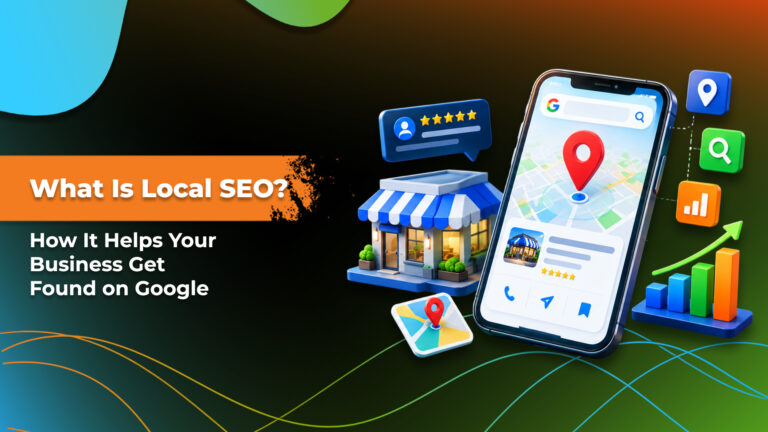
Mobile marketing and local SEO are linked because people often search for nearby businesses from their phones, and Google uses the mobile version of your site to decide how to rank it. A business that is easy to find on a map but frustrating to use on a phone loses customers at the last step, while a fast mobile site that is missing from local results is never seen. This guide explains how the two work together, what to fix first and how to measure the results.
Why Are Mobile Marketing and Local SEO Connected?
Think about when you search for a business on your phone: you are often out, you need something soon and you want a quick answer such as hours, a phone number or directions. That is local intent on a mobile device. Two Google systems make the connection practical:
- Mobile-first indexing. Google uses the mobile version of your content for indexing and ranking, as explained in its mobile-first indexing guidance.
- Local ranking factors. Google says local results are based mainly on relevance, distance and prominence, and the distance part is usually measured from where the searcher is, which on a phone is often right now.
What Does a Mobile Local Search Result Show?
Most of what a customer sees before they ever visit your website comes from your business listing. Here are the parts worth getting right.
Illustrative business
rating and review count
Address and distance shown
Example only, not a real business or rating.
- Business name. Use your real name, exactly as it appears on signage and your site.
- Category and reviews. Choose the most accurate main category. Reviews come from real customers, so ask and reply.
- Hours. Keep regular and holiday hours current. Wrong hours lose customers quickly.
- Call, directions, website. Make sure the phone number, address pin and website link all work from a phone.
- Photos. Add real photos of your premises, team and work.
- Reviews and answers. Respond to reviews and questions, politely and promptly.
How Does Mobile-Friendliness Affect Local SEO?
Local searchers on phones act quickly, so the site they land on has to work immediately. Google recommends that your mobile site contain the same primary content, headings, metadata and image alt text as your desktop site, and warns that a mobile page with less content may lose traffic. Beyond that, check these basics:
- Speed. Compress images and avoid heavy scripts so pages load quickly on mobile data.
- Tap-friendly design. Buttons and links should be large enough to tap, with text readable without zooming.
- Click-to-call. Make your phone number a tappable link, and put it where people look first.
- Clear location details. Show your address, hours and service area as text, not only in an image.
- No blockers. Avoid pop-ups that cover content on small screens.
Our guide to engaging website design goes deeper on mobile layout.
How Do You Improve Local SEO?
- Claim and complete your Google Business Profile (formerly Google My Business): category, hours, services, photos, website and a plain description.
- Check other listings. Platforms such as Bing Places and Apple Business Connect let you manage how you appear in other search and map services.
- Keep your name, address and phone number consistent across your site and every listing.
- Collect and answer genuine reviews. Do not buy or incentivize them.
- Write local content that is actually useful, such as service pages, answers to common local questions and details about the areas you really serve.
- Use your location naturally. Mention it where it fits in headings and copy, but do not tack a place name onto every phrase.
Our post on digital marketing tips for Cornwall and Ottawa businesses has a fuller local search checklist.
Why Should You Work on Both Together?
Handling them separately causes avoidable problems. A page full of location phrases that is hard to read on a phone, with long blocks of text and no headings, may rank but still lose the visitor. A beautiful mobile site with an inaccurate listing sends people to the wrong hours or address. Plan each page and listing with both in mind: accurate local details, short paragraphs, clear headings and one obvious next step such as calling, getting directions or booking.
What Counts as Mobile Marketing Beyond SEO?
- Mobile-friendly ads, with location targeting that matches the areas you serve.
- QR codes on signage or packaging that open a menu, offer or booking page, with a mobile-friendly landing page.
- Text message marketing, which needs prior consent under Canada’s anti-spam law (CASL) and a way to unsubscribe.
- Social media content designed for vertical, short viewing on phones.
How Do You Measure Mobile and Local Performance?
- Business Profile insights: calls, direction requests and website clicks.
- Search Console: impressions and clicks, filtered by device to see mobile performance, and queries that include your area.
- Analytics: mobile sessions, and which of them end in calls, forms or purchases.
- Reviews: volume, recency and how quickly you reply.
Local positions vary by location, device and time, so treat them as a rough guide and look at trends. Our guide to how SEO works explains how to read these numbers.
Common Mistakes to Avoid
- Letting listings go stale, with outdated hours, phone numbers or addresses.
- Stuffing location keywords into pages instead of writing helpfully.
- Testing only on a desktop. Check key pages on a real phone.
- Creating near-duplicate area pages with only the place name changed.
- Ignoring reviews or buying them.
Working With Digitalise
Digitalise is an Ottawa-based agency that offers local SEO, web development, social media and paid advertising, among other services. We do not promise rankings or specific results. To learn more, see our local SEO services.
Frequently Asked Questions
How are mobile marketing and local SEO related?
Many local searches happen on phones, and Google uses the mobile version of your site for indexing and ranking, so mobile experience and local visibility affect each other.
Does my business need local SEO if I serve customers online?
If you have a physical location or a defined service area, yes. If you serve customers only online or nationally, local SEO matters less, but mobile optimization still does.
What is the first thing to fix for local SEO?
Claim and complete your Google Business Profile, with accurate details that match your website.
Do I need a separate mobile site?
No. A responsive design that serves the same content on every device is the simplest approach and works well with mobile-first indexing.
Can I text customers for marketing?
In Canada you generally need consent first and must provide an unsubscribe option. Check CASL requirements or ask a lawyer.
How do I know my mobile and local efforts are working?
Track calls, direction requests, mobile sessions and enquiries over several months, along with reviews and Search Console impressions.
Final Thoughts
Treat mobile and local SEO as one system. Make your listing accurate, make your mobile pages fast and clear, collect honest reviews and measure calls, visits and enquiries.